

When we analyze the mechanics of live TV games like Support Cash Or Crash Live, we encounter components intended to offer players a semblance of command within a high-risk setting. The Block function is notable as one of the most important gameplay tools offered to UK players. Unlike the core game of luck, where a random multiplier can crash at any moment, the Block permits a participant to proactively ‘lock in’ a part of their possible gains before the certain crash takes place. It transforms a completely reactive activity into a more involved, choice-driven type. We view its use as a vital risk-management tactic, distinguishing recreational play from more thoughtful methods. For the UK audience, where gambling is often perceived through a prism of both fun and astute participation, learning to use this feature is crucial to managing the game’s inherent struggle between greed and protection.
Distinguishing Block to Auto-Cash-Out
It’s vital to differentiate the Block function from the separate Auto-Cash-Out feature, as UK players at times conflate the two. Auto-Cash-Out is a preset tool where you set a multiplier at which your entire bet is automatically cashed out, terminating your involvement in that round fully. The Block function is more refined. It does not end your round; it just secures a portion of your winnings while your live bet carries on to ride. This means you can still benefit from a climbing multiplier after blocking, which is unattainable with Auto-Cash-Out. We regard Auto-Cash-Out as a tool for self-regulation, imposing a firm profit target. The Block, though, is a tool for risk management and opportunity maximisation. A astute UK player might use both in combination—for illustration, establishing a cautious Auto-Cash-Out at 10x but using a manual Block at 4x to lock in a minimum profit well before that target.
Frequent Blocking Mistakes you Should Avoid
Through our analysis of gameplay, we’ve identified several typical pitfalls UK players should be aware of when using the Block. The most prevalent mistake is blocking out of fear at the first sign of a rising multiplier, often at a value so low it barely covers the initial stake. This defeats the function’s purpose of securing significant profit. Conversely, greed causes the mistake of never blocking at all, treating every round as an all-or-nothing gamble, which statistically wipes out gains over time. Another nuanced error is positioning the block at a round, psychologically important number like 5.0x, which many other players are also likely to use. If a crash is designed to frequently occur just below such common thresholds, this strategy can fail. We recommend players to adjust their block points and base them on a pre-defined strategy rather than emotional impulses during the midst of the round.
What the Block Function In Reality Entails
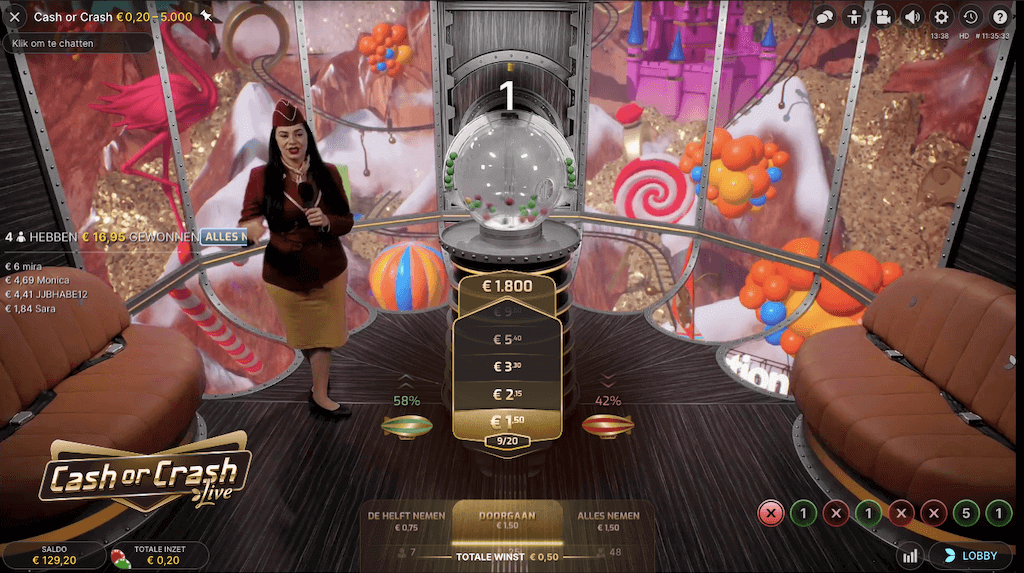
Fundamentally, the Block function in Cash or Crash Live is a straightforward yet potent security measure. During a round, as the multiplier climbs, a user can press the Block button to lock in a part of their potential cash-out value. This step sets a secure baseline for the round’s earnings. If it busts at a value below the position of their block, they are still awarded the secured sum. If it goes beyond the block point, their potential winnings continue to grow, but the blocked sum is safe. It’s crucial to understand that employing the Block does not conclude your play during that round; your active multiplier keeps running, yet you’ve got a safety cushion. We consider this dual-mode experience—having safety while remaining active—to be the feature’s mental appeal. For UK players, it tackles the classic dilemma of figuring out when to secure winnings, a notion recognized from everything from the stock market to a tense round of a pub quiz.
The way UK Rules Shape Feature Application
The use of features like the Block is not an isolated event; it is shaped by the UK’s strict gambling regulations and responsible gaming environment. The UK Gambling Commission requires that games offer clear information and instruments that foster player control. The Block function is in perfect alignment with this principle, as it is a practical tool for risk management and minimizing losses. Moreover, the availability of detailed game stats and history, which UK-licensed sites must provide, directly contributes to Block strategy. Players can review past rounds to guide their timing, adding an analytical element to the game. We also observe that the UK industry’s emphasis on transparency results in the mechanics of the Block are explicitly outlined, avoiding confusion. This framework of regulations promotes a more measured, strategic approach to the gameplay, where the Block is regarded more than a button, it is a core part of strategic playing.
Tactical Scheduling for UK Players
Strategic use of the Block is all about timing, and UK participants frequently create habits according to noted gameplay patterns and individual tolerance for risk. There is no universally ideal moment, which is what makes it a topic of such debate. Some recommend an first block, possibly at a conservative 1.5x or 2x multiplier, to ensure a small but consistent profit, accumulating a capital steadily and soundly. Other players, chasing greater returns, will permit the multiplier go far higher before using their block. We find how many veteran participants in the UK use a hybrid approach, modifying their block point depending on the behavior of latest games. For instance, after multiple consecutive low-multiplier failures, some could deploy earlier, expecting a pattern. In contrast, after a large multiplier, the following game could witness players blocking later, anticipating it happening again. The key is that the decision is dynamic and situational, transitioning the user from a passive observer to an active participant, handling their own exposure.

Creating a Personal Block Plan
Formulating a steady personal strategy for the Block is the trademark of a thoughtful Cash or Crash Live player in the UK. We suggest starting with a bankroll strategy plan: decide what fraction of your session stake you are prepared to risk per round and what constitutes a successful profit target. Your Block plan should serve these goals. One approach is the “tiered block,” where you allocate a small percentage of your potential winnings at a modest multiplier, another part at a middle multiplier, and let the balance ride. Another is the “fixed profit” strategy, where you compute the specific multiplier needed to obtain a particular profit and stop there always, ignoring the temptation of higher multipliers. Crucially, any plan must be recorded and followed before you start playing, as in-play emotions will hinder reasoning. The Block is a powerful tool, but its potential is only unlocked through controlled, deliberate execution.
Emotional Impact on Gameplay
The introduction of the Block option fundamentally alters the mental interplay of Cash or Crash Live. Without the Block, the game is a pure test of nerve, a binary “cash out or bust” scenario that often leads to regret—either from cashing out too early or busting out. The Block resolves this by furnishing a third, reassuring choice. The Block reduces the dread of bankruptcy, which in turn can lead to calmer and more gainful decisions. We find that UK players utilizing the Block often report feeling more in control, which enhances their fun and commitment with the game. On the other hand, it also creates new forms of mental stress, like the annoyance of blocking at 3x only to watch the multiplier ascend to 10x. This “fear of missing out” (FOMO) is a strong driver, and learning to manage the emotional response to a well-timed or mistimed block is equally crucial as mastering the timing.